


Stories worth reading. Stop indexing the internet.

The $255 Beach Shade Dividing America’s Coastal Towns
“Some beachgoers love Shibumis for their simplicity and safety. Others consider them a nuisance, and some places have banned them.” [WSJ*]

Why ‘Smart’ Products Have Started to Look Like the Dumb Choice
[NYT*]

The Fastball Has Never Been Faster
“Pitchers like Jacob Misiorowski are throwing harder than ever, a result of modern baseball’s pitching development. But what does that kind of velocity do to the human arm?” [New Yorker]
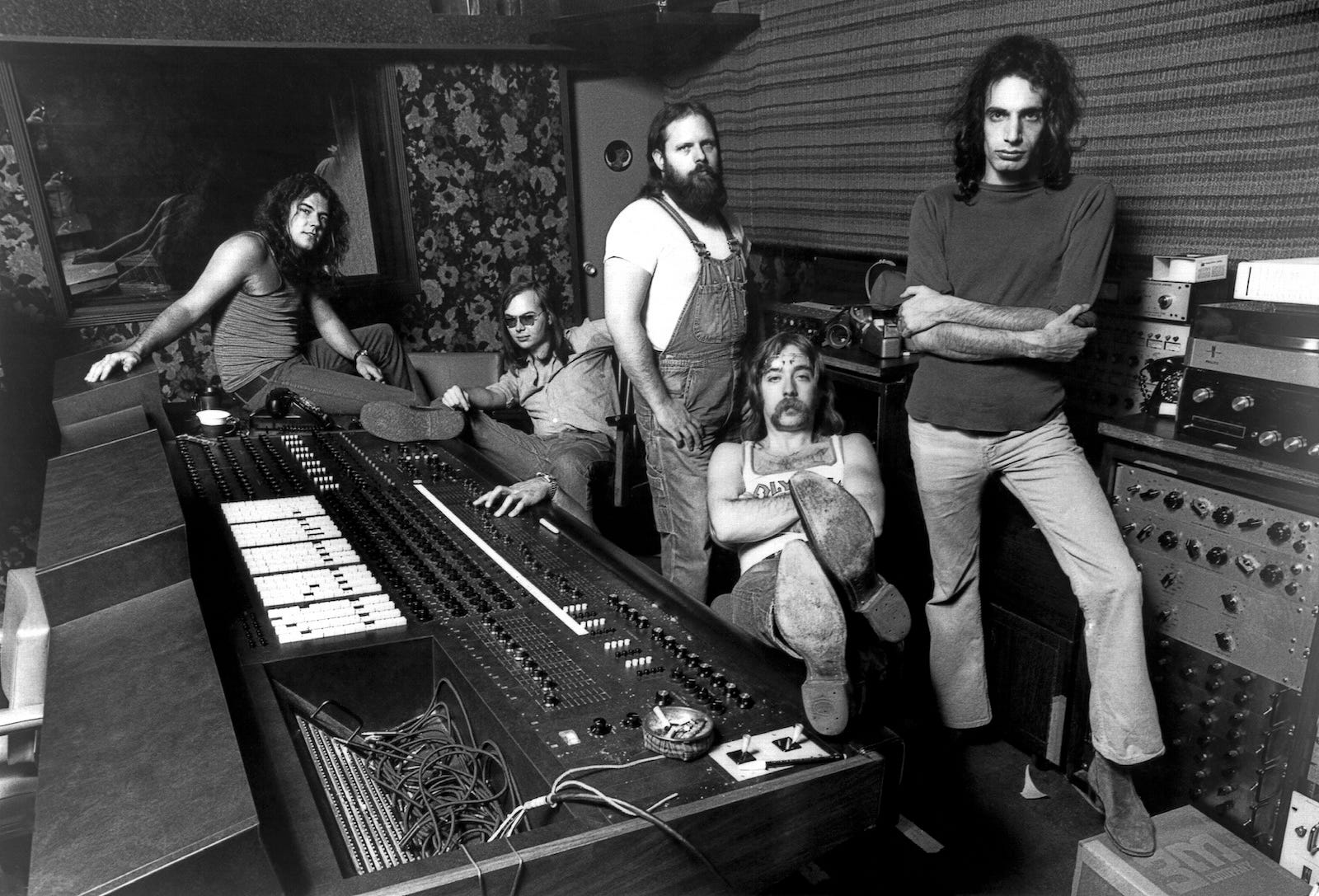
The Dude Ranch Above the Sea
“Steely Dan conjured a sealed-in-amber studio perfection—a sound that could alienate listeners as easily as seduce them.” [The New York Review]
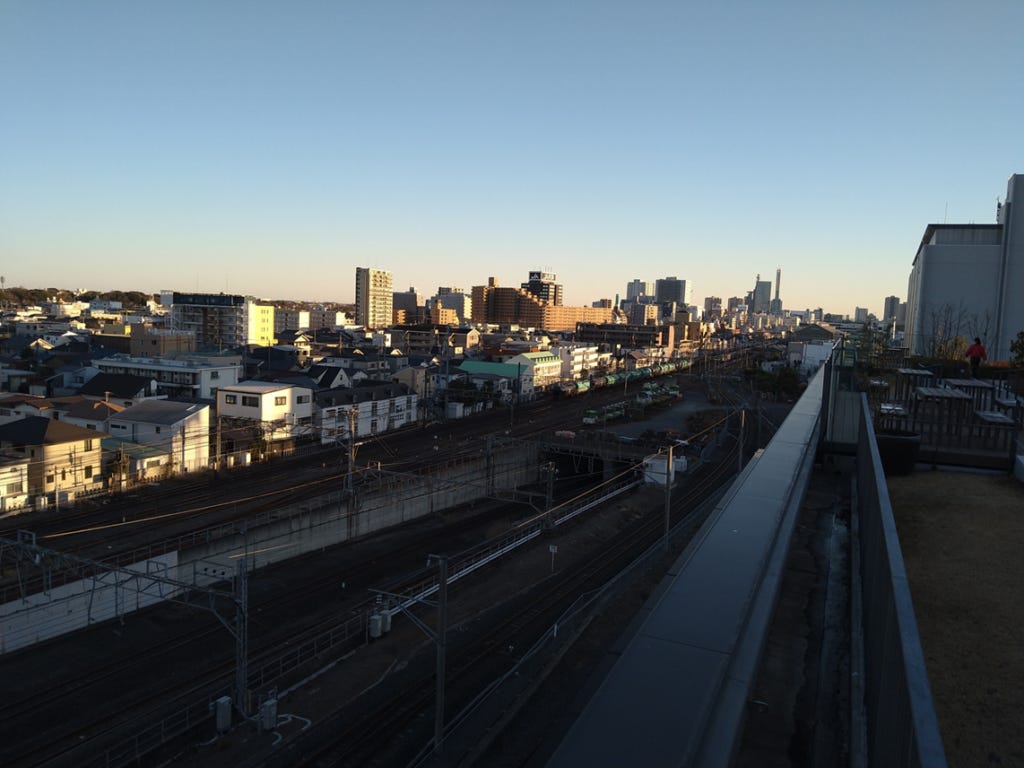
The secrets of the Shinkansen
“Why Japanese train companies own hospitals, baseball teams, and retirement homes” [Works in Progress]


A shortlist of things we’ve got our eye on.

Boglioli for Trunk Wool Hopsack K Jacket

Wythe Kingdom moc

Ecru Nepped Silk

Huckberry x Bedrock Mountain Clog

Buck Mason Breeze Cotton Linen L/S Shirt

Muji Cotton Garment-Dyed Shorts

Prasan Shah of Original Madras Trading Company

Madras has always been one of our favorite summer fabrics — we’ve been making shirts in it with Original Madras Trading Company for several years. OMTC is unique that it has an extensive archive and it is one of the only comapanies still making Madras cloth the old way, by hand. (Most of what gets sold under the banner of madras today isn’t handloom and doesn’t bleed it did in the past.) We caught up with Prasan Shah, whose family has spent more than fifty years supplying fabric to some of the biggest names in American menswear, to talk about what genuine madras is, why it ages so well, and what makes it different.
Most of what gets sold as madras today isn’t made in Chennai, isn’t handloomed, and doesn’t bleed. What are people actually buying now?
Most of what is sold as “madras” today bears little resemblance to the original cloth that came out of Chennai. The majority is produced on modern power looms, often outside of India, and is designed to be colorfast and consistent. There is nothing inherently wrong with that, it serves the needs of today’s market, but it is a very different product from traditional Madras cloth.
For us, authentic Madras is defined not only by where it is made, but by how it is made. It should be handwoven in Madras, now Chennai, by skilled weavers using techniques that have been passed down through generations. Historically, one of the defining characteristics of genuine Madras was the way it softened and evolved with age, giving each garment its own character.
What most consumers are buying today is a modern interpretation of Madras rather than the original fabric itself. It is a bit like Harris Tweed. You can make a tweed inspired fabric anywhere in the world, but Harris Tweed can only come from a specific place and be made in a specific way. We believe the same principle applies to true Madras cloth.
What can you tell about a piece of handloom madras almost immediately just from touching it?
The first thing you notice is that it feels alive. Handwoven cloth has a character and texture that is difficult to replicate on a machine loom.
Because each length of cloth is woven by a single weaver, no two pieces are exactly alike. There is an inherent beauty in handwoven cloth that comes from the subtle irregularities and variations created by human hands. We do not see the role of the handloom weaver as mimicking a machine. We strive for craftsmanship rather than uniformity.
Today, sophisticated consumers increasingly appreciate individuality over perfect consistency. If a machine woven fabric contains an irregularity, there is usually a technical issue with the loom. If we find a few irregularities in a cloth woven on one of our handlooms, we know we have a weaver with a soul.
Those variations are not flaws. They are what give the cloth its identity. The beauty of handloom lies in what I like to call its perfect imperfections. It is a feature, not a flaw.
Your family spent fifty years supplying fabric to the biggest names in American menswear. What made you decide to build something around the original cloth instead?
Madras is the reason our family business exists and has survived for more than five decades. As a third-generation steward of the business, when we decided to launch our own label we had to ask ourselves what would remain relevant for the next fifty years.
Over the years we have produced for many wonderful brands, some of which are still thriving and others that have disappeared. Through all of those cycles, Madras itself remained. It has moved in and out of fashion, but it has never truly gone away.
At the same time, we were watching a craft slowly disappear. As the world becomes increasingly driven by technology, automation, and now AI, we felt there was value in returning to something original, human, and real. Building Original Madras Trading Company around handwoven Madras was our way of helping preserve a craft that deserves a future.
You’ve started hand spinning the yarn before it’s woven. Where does that actually show up in the finished fabric?
We currently hand spin only a small portion of the yarn used in our collection because it is a time consuming and expensive process.
You see the difference most clearly in some of our special weaves and naturally dyed fabrics. Handspun yarn introduces subtle variations in texture and character that are impossible to achieve with industrially spun yarn. The fabric feels more organic and develops beautifully with wear.
Some of our naturally dyed fabrics are also intentionally designed to bleed, which allows them to evolve over time in much the same way traditional Madras did decades ago.
Real madras changes pretty dramatically over time. What does a shirt look like after twenty years when it’s been worn constantly and washed hard?
It looks like a shirt with soul.
The colors soften, the fabric relaxes, and it develops a patina that no amount of money can buy. The shirt begins to tell the story of the person who wore it. In many ways, a great Madras shirt becomes more beautiful with age because it reflects a life well lived rather than remaining frozen in time.
When you started the hand weaving operation, the specialist you brought in went back to his village looking for weavers and found just one person still actively doing it. Did that surprise you, or did you already know how close this was to disappearing?
It did not entirely surprise us, but it certainly reinforced the urgency of what we were trying to do.
One of the reasons we founded Original Madras Trading Company with the commitment that everything would be handwoven was because we could see this tradition slowly disappearing.
When we launched the brand for Spring Summer 2020, we worked with just two weavers. Today, thanks to the support of our customers and wholesale partners around the world, we help support more than fifty weavers and their families.
That growth gives me hope. It proves that there is still a place in the modern world for genuine craftsmanship when people are given the opportunity to experience it.
Outside of OMTC, what have you been most interested in lately? Could be a maker, a cloth, a place, a book, a craft tradition, anything you’ve found yourself thinking about a lot.
I was recently married, so I would have to say this new chapter of my life.
My wife has spent much of her career in fashion marketing and PR, and while she doesn’t work in the business with me, she has become one of my most trusted advisors. She has an uncanny ability to simplify problems that I have spent days overthinking.
She is also very good at reminding me that there are bigger things in life than whether someone is selling machine-woven Madras and calling it handloom. I am not always convinced she’s right, but she is usually right.
Between building a business and being newly married, I have found myself thinking less about the next season and more about building things that last. Fortunately, she is patient enough to listen to far more discussions about cloth and weaving than anyone should reasonably have to endure.

Welcome to Classifieds. A place to share what’s happening in and around our world. Shops, events, newsletters, projects, whatever you’re working on. If you’d like to place something, get in touch. $200 for four ads, 280 characters each.
🛒 Nepenthes Los Angeles Flea Market.
Sunday, June 7th at WHR HQ, Costa Mesa, CA.
Nepenthes Los Angeles hosts a one-day shopping event featuring selections from Engineered Garments, Needles, and South2 West8, alongside with store-exclusive items.
🛒 Ford General Archive Sale at Old Town Art Fair
June 10-14th. 1712 N. Wells St. Chicago.
• $5-$100 items
• Spring/Summer pieces
• archival women’s clothes & shoes
• natural garments
• 50-70% off select brands